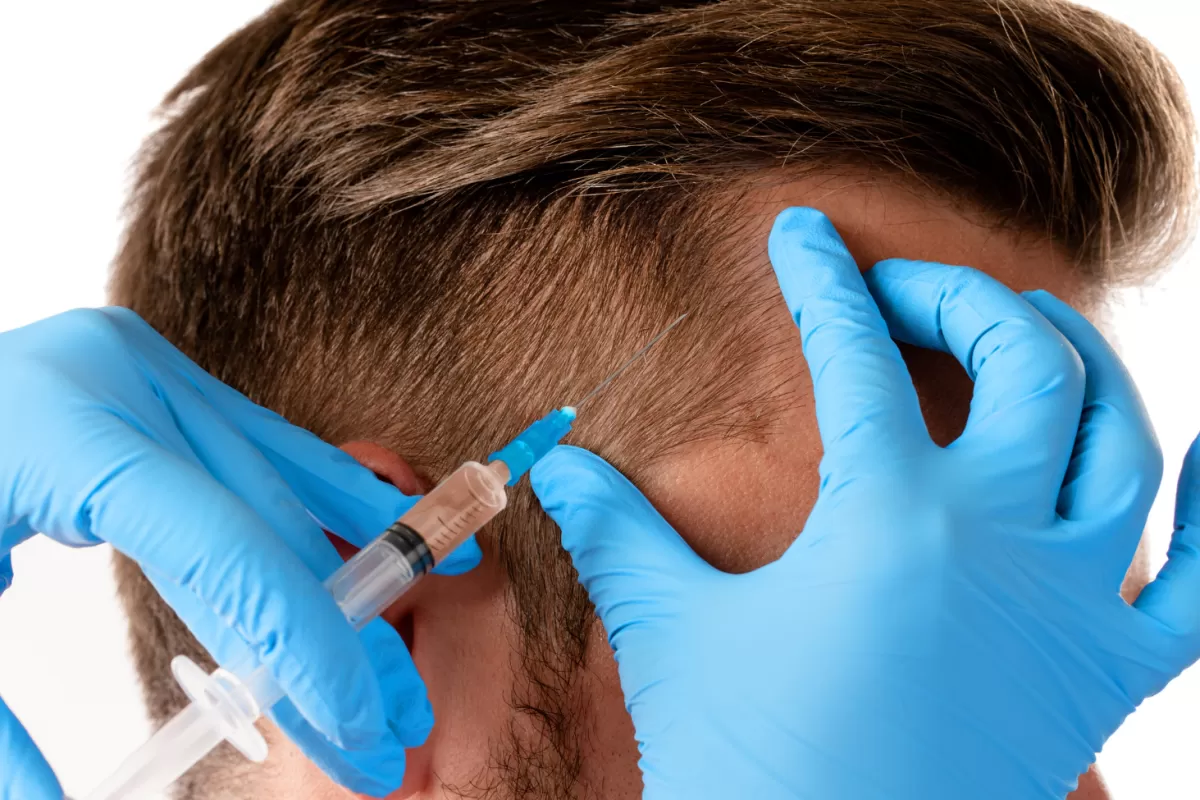
FUE Hair Transplant: Preparation and Aftercare Guide

Follicular Unit Extraction (FUE) is a modern hair transplant technique used to restore hair by transferring individual hair follicles from a donor area of the scalp to areas affected by hair loss.
Proper preparation before your procedure and careful aftercare afterwards are essential for protecting the transplanted grafts and supporting optimal hair growth.
Below are Dr Wen’s recommendations on how to prepare for your FUE hair transplant procedure and how to care for your scalp after treatment.
Preparing for Your FUE Hair Transplant
Taking a few steps prior to your procedure can help ensure the treatment runs smoothly and minimise complications.
Three Days Before Your Procedure
It is recommended that the donor area at the back of your scalp be trimmed using an electric shaver with a zero guard. The hair should be shortened from the nape of the neck up to the level of the ears, extending from ear to ear. This area can then be blended into a short crew cut.
The Day Before Your Procedure
Wash your hair with your usual shampoo to ensure the scalp is clean prior to surgery.
The Night Before and Morning of the Procedure
Avoid alcohol and caffeine, as these substances may increase bleeding and affect hydration.
What to Wear
On the day of the procedure, wear a button-down or zip-up shirt. This allows clothing to be removed easily after the procedure without disturbing the treated scalp.
Before the procedure begins, your doctor will review the treatment plan and confirm the hairline design to ensure you are comfortable with the planned outcome.
Our team will then assist you into a comfortable gown and prepare the donor area by shaving the back of the scalp to skin level.
During the FUE Procedure
FUE hair transplant procedures are typically performed in the clinic under local anaesthetic.
Prior to starting, you may be offered pre-medication to help reduce anxiety and improve comfort during the injections used to numb the scalp.
Once the scalp is fully anaesthetised, the surgeon will begin extracting individual hair follicles from the donor area. This process usually takes approximately three to four hours.
A break is scheduled during the day for lunch.
In the second stage of the procedure, local anaesthetic is applied to the recipient area where the hair will be transplanted. Small, carefully controlled incisions are created in the scalp, with attention to depth, angle, direction and density to replicate natural hair growth patterns.
The extracted grafts are then placed into the prepared sites so that the transplanted hairs will grow in a natural direction over time.
Aftercare Following Your FUE Hair Transplant
Proper aftercare is essential for protecting the newly implanted grafts and supporting healing.
Protecting the Donor and Recipient Areas
Avoid touching, rubbing or applying pressure to the donor site or the newly implanted grafts.
To help keep the recipient area hydrated, use the saline spray provided every 30 minutes as directed.
Sleeping Position
For the first two nights after the procedure, sleep with your head elevated. This can be achieved by using two to three pillows or a travel neck pillow to support the neck and reduce swelling.
Pain Relief
Mild discomfort may occur after the procedure. If pain relief is required, paracetamol (Panadol) may be used as directed.
Avoid taking medications such as aspirin, ibuprofen or other blood-thinning medications, as these may increase bleeding.
Scabs and Itching
Small scabs and itching around the graft sites are common during the healing process. Do not pick or scratch the scabs, as this may dislodge grafts or lead to scarring.
Minor Bleeding
Occasionally, small amounts of bleeding may occur. If this happens, apply gentle pressure using a damp gauze pad or cotton bud. Press lightly without rubbing the area.
What to Expect After an FUE Hair Transplant
Hair growth following an FUE transplant occurs gradually and requires patience.
During the first one to three months, the transplanted hairs often enter a temporary resting phase and may shed. This is a normal part of the hair growth cycle and does not mean the grafts have failed.
New hair growth usually begins between four and twelve months after the procedure. The final result typically becomes fully visible around nine to twelve months after treatment.
FUE Hair Transplant in Canberra
FUE hair transplantation is a minimally invasive technique designed to restore hair growth using your own natural hair follicles.
If you are considering FUE hair transplant treatment in Canberra, a consultation with our qualified practitioner can help determine whether the procedure is suitable for your hair loss concerns.